In This Guide
What Is a Call Sheet?
A call sheet is a one-page (sometimes two-page) document distributed to every member of the cast and crew before each day of shooting. It contains all the information anyone needs to show up prepared: the day's scenes, call times for each department and actor, location addresses and parking, weather conditions, special instructions, and emergency contacts.
On a professional production, the call sheet is the official daily communication — it supersedes any verbal plans or earlier schedules. If the call sheet says crew call is at 7 AM, that's the time. If it lists scenes 4, 12, and 18 for the day, those are the scenes. Departments use it to prepare their specific needs, and the production office uses it as the paper trail for the day's plan.
On indie productions, call sheets serve the same function even if the format is less formal. The core purpose doesn't change: make sure everyone knows where to go, when to be there, and what's happening.
Who Makes It and When?
On a professional set, the 2nd AD assembles the call sheet, the 1st AD approves it, and the production coordinator distributes it. On an indie set, it's whoever is most organized — often the producer, the AD, or the director themselves.
The call sheet should be distributed the evening before the shoot day — typically by 6 or 7 PM. This gives cast and crew time to review it, set alarms, plan their commute, and ask questions. Sending it at midnight or the morning of the shoot is a red flag that the production isn't well-organized.
The timing matters because the call sheet often depends on information that isn't finalized until late in the day. Weather forecasts need to be current. The shooting order might have changed during the day's production. An actor's availability might have shifted. The person assembling the call sheet needs to balance timeliness with accuracy.
The Header: Production Info
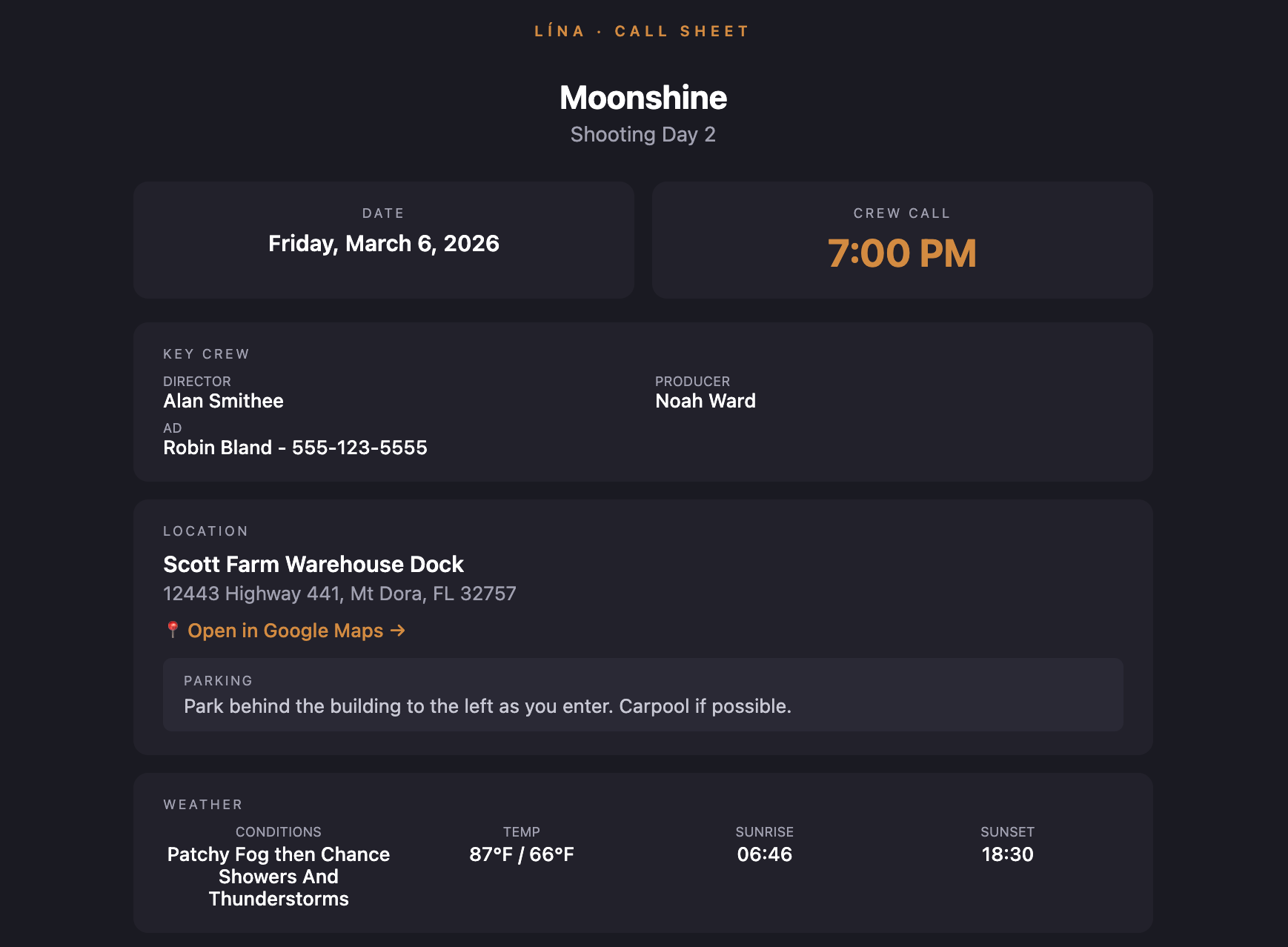
The top of the call sheet identifies the production and the shoot day. This typically includes the production title, the production company name, the date, the day number (e.g., "Day 3 of 12"), the general crew call time, and the weather forecast.
The weather section is more important than it might seem. Exterior scenes depend on it. Departments use it to plan — grip and electric need to know about wind, wardrobe needs to know about temperature, and everyone needs to know about rain. Include the high and low temperature, precipitation probability, sunrise and sunset times (especially important for exterior day scenes), and any weather advisories.
The Schedule: Scenes for the Day
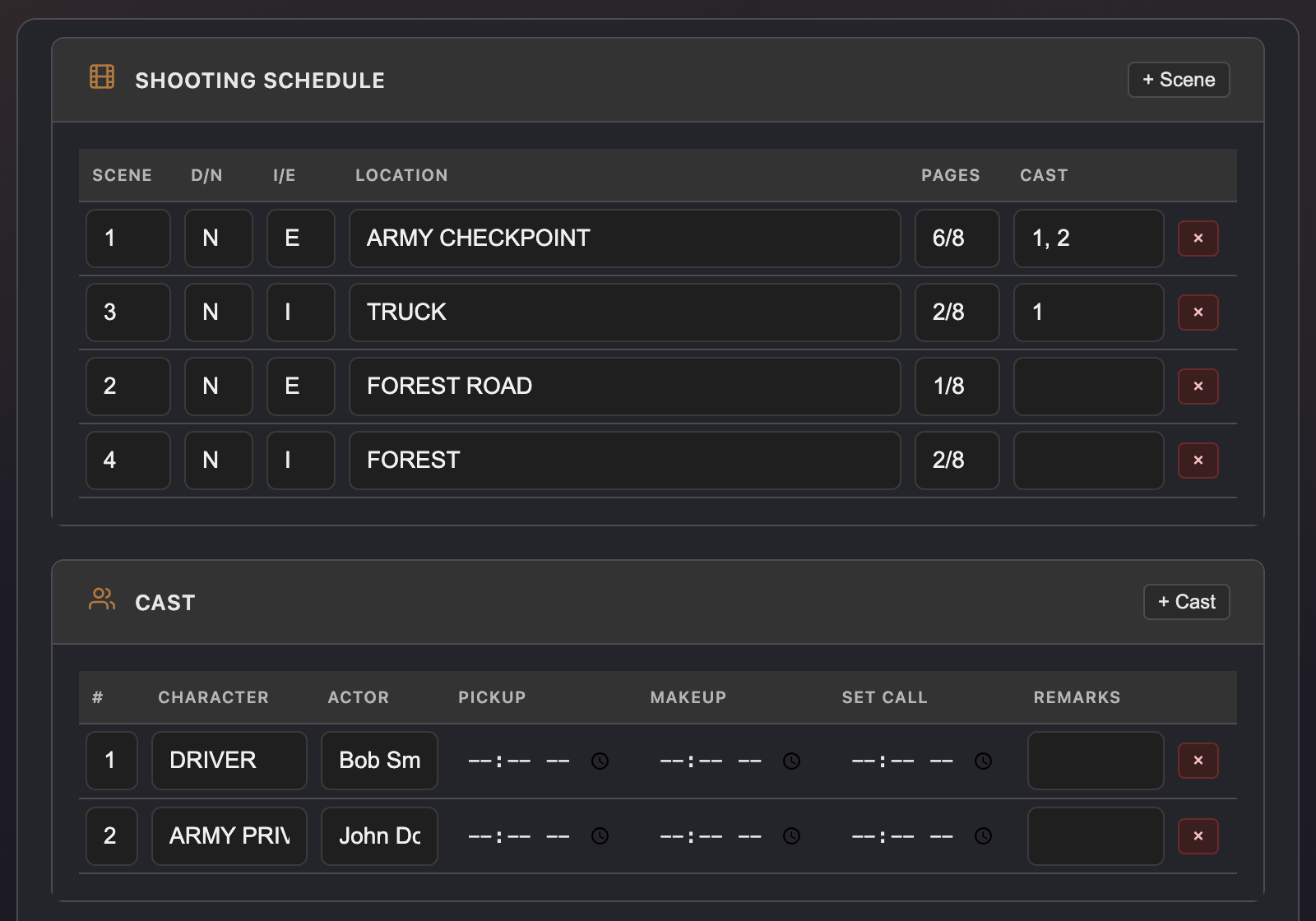
The scene schedule is the core of the call sheet. It lists every scene being shot that day, in shooting order, with key information for each: scene number, scene heading (INT/EXT, location, time of day), a brief description or synopsis, page count, and the cast members involved.
This section comes directly from the shooting schedule. The scenes listed here are the ones assigned to this day on the stripboard, in the order the 1st AD plans to shoot them. If the schedule has been updated since the stripboard was built, the call sheet should reflect the current plan.
Some call sheets also include estimated start times for each scene. This is a double-edged sword — it helps departments prepare for upcoming scenes, but it also creates an implied commitment that rarely holds up once the day is underway. If you include time estimates, make it clear they're estimates, not guarantees.
Cast Calls
The cast section lists every actor working that day with their individual call times. Unlike the general crew call, each actor's call time is tailored to when they're actually needed. An actor who's only in the last scene of the day doesn't need to arrive at 7 AM with the rest of the crew.
For each cast member, the call sheet typically shows their character name, actor name, call time, and any special timing: makeup call (if they need extensive makeup or prosthetics before their on-set call), wardrobe call, and on-set call. A cast member who needs two hours of special effects makeup will have a call time much earlier than their actual scene.
The cast calls are derived from the breakdown data — which cast members are in which scenes — combined with the day's scene schedule. If scene 14 is first up and scene 22 is last, the cast members in scene 14 need to be there at crew call, while those only in scene 22 might have a later call.
Tip: Double-check your cast calls against the actual scene order, not just the scene numbers. It's easy to accidentally give an actor a late call because their scene number is high, forgetting that the scene is actually scheduled early in the day. The shooting order — not the script order — determines when actors need to arrive.
Crew and Department Calls
The crew section lists the departments and their call times. On many productions, the general crew call is the same for everyone — 7 AM means the entire crew arrives at 7 AM. But some departments need to arrive earlier: the catering team sets up before crew call, the grip and electric team might need a pre-call to start rigging, and the makeup department might have early calls for cast members with extensive makeup requirements.
The crew section typically includes the department name, the department head's name, and their call time. On smaller productions, it might just list crew members by name with their roles. The level of detail depends on the production's size and formality.
Logistics and Safety
The bottom of the call sheet contains the practical information that keeps the day running: location address with parking instructions, directions or a map link, hospital and emergency information (nearest hospital name, address, and phone number), production office contact information, and any special instructions for the day.
Special instructions might include parking restrictions, noise curfews, areas that are off-limits, safety briefing requirements for stunt or effects scenes, or reminders about call sheet-specific policies like cell phone usage on set.
The nearest hospital information is not optional. On any professional set, the call sheet must include the name, address, and phone number of the nearest emergency room. Even on micro-budget productions, this is a basic safety requirement. Know where the hospital is before something goes wrong, not after.
Distributing the Call Sheet
Once the call sheet is assembled and approved, it needs to get to every person on the cast and crew list. The standard distribution methods are email and messaging — send a PDF to everyone on the contact list.
A few practical considerations: send it as a PDF attachment, not just text in the email body. People need to be able to save it, print it, and reference it on set where internet access might be unreliable. Include the shoot date and day number in the subject line so it's easy to find in a crowded inbox. And send it to everyone — not just department heads — so no one is relying on secondhand information.
Some tools offer read tracking — confirmation that each recipient has opened the call sheet. This is useful on larger productions where the AD needs to know that everyone has received the day's plan. If someone hasn't opened it by a certain time, a follow-up call or text is warranted.
On set, have printed copies available. Phones die, internet drops, and there's something irreplaceably useful about a physical sheet that the 1st AD can point to when someone asks "what's next?"